
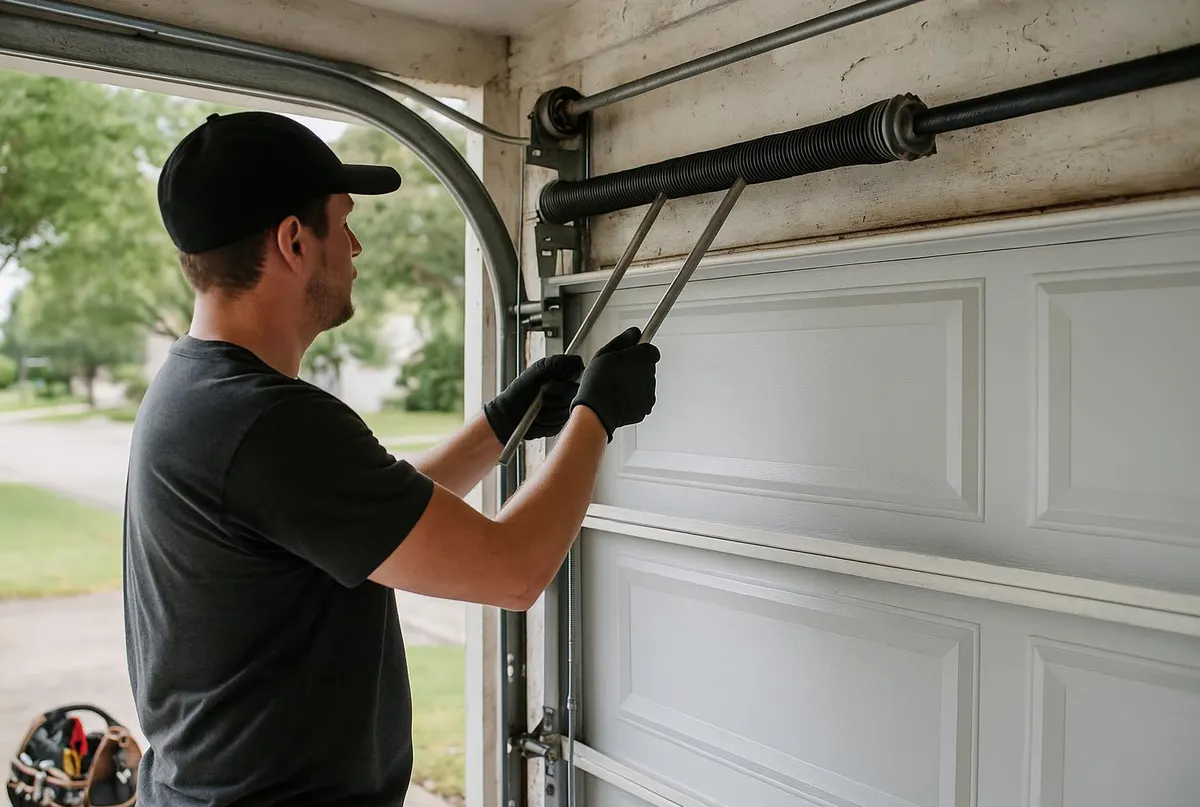
The Argument Usually Starts in the Driveway
It goes something like this: you're standing in the garage, keys in hand, staring at a spring that just let go for the second time this year. Your spouse walks by, glances at the steel roll-up door on the packing house or equipment barn down the road, and says, \"Why don't we just get a door like that? Those things never seem to break.\" You say that's a commercial door, it's not the same thing, and now you're having an argument about garage doors in the driveway. This is the text message that settles it.
They're Not the Same Door, Just Scaled Up
A commercial or warehouse overhead door and a residential garage door do the same basic job — they open, they close, they seal out weather — but almost everything under the skin is different.
Steel Gauge and Panel Construction
Residential doors are typically built from lighter-gauge steel, aluminum, or wood composite panels, sized to cover a standard double or single opening without needing heavy-duty hardware. Commercial doors use thicker, heavier-gauge steel sections because they're often wider, taller, and built to take repeated impact from forklifts, pallets, or delivery traffic. That extra steel adds weight, which changes everything else about the door.
Springs, Shafts, and Cycle Life
More weight means different torsion springs, heavier shafts, and bigger bearing plates. But the bigger difference is cycle life — how many times the door is designed to open and close before parts wear out. A residential door might see four to six cycles a day. A commercial door on a packing house or small warehouse can see dozens of cycles in a single shift. Commercial springs and openers are rated for tens of thousands more cycles than residential equipment, which is why you can't just bolt a home garage door opener onto a 12-foot commercial door and expect it to hold up.
Tracks and Mounting
Commercial doors often run on heavier track with reinforced angle iron, anchored into block or steel framing rather than wood studs. That matters here, because a lot of Polk County's agricultural buildings — citrus packing sheds, equipment barns, small shop buildings — are built with exactly that kind of structure in mind, while a typical attached home garage is framed in wood.
Wind Load Is Where It Gets Local
Florida's wind-load rules apply to both residential and commercial overhead doors, but the engineering looks different depending on the size of the opening. A wide commercial door has more surface area for wind to push against during a tropical system, so it needs reinforced struts, heavier end hardware, and sometimes a different bracing pattern than a standard two-car residential door rated for the same wind zone. If you're ever comparing a quote for a shop building to a quote for your house, this is one reason the numbers and the hardware won't match up.
Maintenance Needs Diverge Too
Because commercial doors cycle so much more often, they need attention on a different schedule than a home garage door.
- Lubrication: High-cycle commercial doors often need hinge, roller, and track lubrication monthly or quarterly. A residential door in average use can usually go longer between lubrication visits, though Central Florida's humidity still argues for checking more often than the manufacturer's minimum.
- Spring and cable inspection: Commercial torsion springs wear out faster simply from use, so they get inspected more frequently. Residential springs fail more often from age, rust, and humidity swelling the metal than from cycle count alone.
- Weatherseal and bottom panel checks: Afternoon downpours push water at the base of any overhead door. On a home garage, a swollen or rotted bottom panel is usually a seasonal humidity issue. On a commercial door, the bigger concern is often debris and grit from loading-area traffic chewing through the seal faster.
- Hardware corrosion: Salt air carried inland during storm systems, combined with everyday humidity, accelerates rust on exposed bolts, hinges, and track brackets. Commercial buildings with larger doors simply have more exposed hardware for that moisture to work on, which is why those doors often get a more frequent visual inspection built into routine upkeep.
What This Means for Your Actual Garage
If your spouse is picturing a steel roll-up door because it seems indestructible, the honest answer is: it's built for a different job. A commercial door's heavier steel and reinforced hardware are designed to survive constant cycling and occasional impact, not to be quieter or more weather-resistant for a home. For a typical attached garage in Babson Park or anywhere else in the area, the smarter move is matching the door to the actual use — a wind-rated residential door, properly maintained through hurricane season, with springs and hardware sized for a handful of daily cycles rather than dozens.
That said, if you run a small operation out of a shop, barn, or detached building — citrus equipment storage, a home-based trade business, anything with a wider opening and heavier daily traffic — that's a case where commercial-grade hardware actually makes sense, and it's worth having a technician assess the opening rather than guessing.
When to Call Babson Park Garage Door Repair
If you're not sure whether your door — home or shop — is holding up the way it should, that's exactly what a Garage Door Maintenance & Tune-Up visit is for. We'll check spring tension, track alignment, hardware corrosion, and seal condition, and tell you honestly whether you're dealing with normal wear or something that needs attention before the next storm system rolls through. If you've already got a door that's sagging, binding, or slamming instead of closing smoothly, our Off Track Door Repair service gets it back on alignment and moving the way it should, whether that's a standard residential door or a wider commercial opening.
Give us a call and we'll settle the argument for you — Babson Park Garage Door Repair is ready to help homes and shops throughout Babson Park, FL and the surrounding Polk County area.