
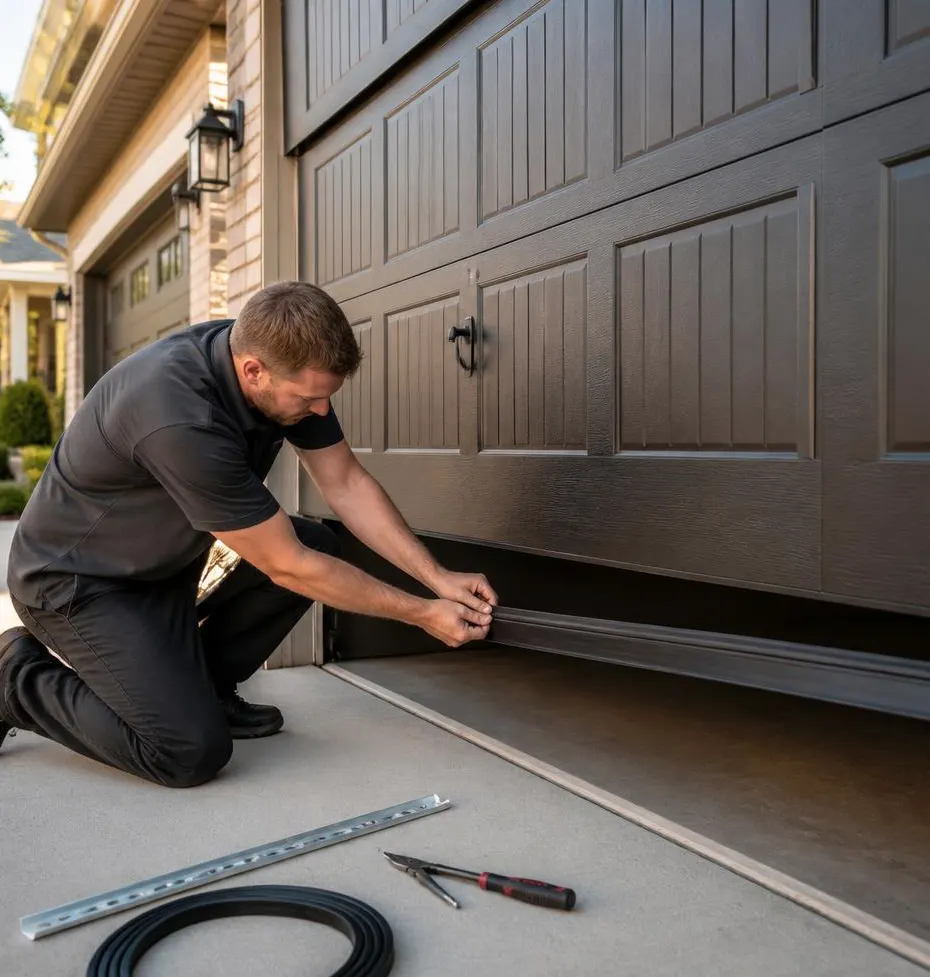
The Moment You Notice It
You hit the button on the wall or the clicker in your truck, and nothing happens the way it should. Maybe the opener hums but the door doesn't budge. Maybe there's dead silence. Maybe the door jerks up six inches and stops, light blinking on the opener unit like it's trying to tell you something. Whatever the exact moment looks like, it usually happens at the worst time — headed to work, groceries melting in the back seat, or trying to beat an afternoon storm rolling in off the lake. The good news is that a stuck garage door almost always has a traceable cause, and technicians check those causes in a specific order because the simplest, cheapest problems are also the most common.
Start With What You Can Hear and See
Before any tools come out, the symptoms themselves narrow things down:
- Total silence when you press the button usually points to power, not mechanics.
- Humming or clicking with no movement often means the opener is trying to work but something mechanical is stopping it.
- The door opens partway and reverses or stops, which frequently traces back to the safety sensors near the floor.
- The door feels impossibly heavy when you try to lift it manually, which is a strong sign of spring or cable failure.
- A loud bang beforehand, followed by the door refusing to move at all, almost always means a spring let go.
These clues matter because they tell you roughly where in the system to start looking, which is exactly how a technician approaches the call.
The Order a Technician Works Through
1. Power and Controls
The first stop is always the simplest: is the opener actually getting power? A tripped breaker, an unplugged cord knocked loose during cleaning, or a dead battery in the wall control can all stop a door cold. After Central Florida's frequent afternoon storms, breakers tripping from a power surge is common enough that it's worth checking before assuming anything mechanical is wrong. The fix here is as basic as resetting a breaker or replacing a 9-volt battery in the wall station.
2. Remote and Keypad Signal
If the wall button works but your remote doesn't, the problem is usually the remote itself — weak batteries, a remote that's lost its programming, or interference. This is a quick swap-and-test fix, not a repair call.
3. Photo-Eye Sensors
Next, the technician checks the small sensors mounted a few inches off the ground on each side of the track. These safety eyes have to see each other in a straight line, and if they don't, the opener refuses to close the door and may also refuse to run it at all. Humidity and condensation can fog the lenses, spider webs and dust collect quickly in garages left open during warm evenings, and a bumped sensor from a bike or lawn equipment can knock the alignment off by just enough to break the beam. The fix is usually cleaning the lenses and re-aiming them until the indicator light goes solid.
4. Manual Disengagement
Sometimes the opener is working fine, but the door itself has been disconnected from it. If the red emergency release cord was pulled — often during a power outage, or during storm prep when someone wanted to operate the door by hand — the carriage sits unlocked from the trolley and the opener runs without moving the door. Reconnecting it is a simple manual step once it's identified.
5. Track and Rollers
If the door hangs up partway, the technician moves to the tracks. Humidity swings common in this part of Florida cause wood-composite panels to swell slightly and metal tracks to shift over time, and heavy afternoon rain can wash debris into the track at ground level. Bent track sections, misaligned brackets, or rollers that have rusted and seized are checked here. Fixes range from clearing debris and re-securing brackets to replacing worn rollers.
6. Springs and Cables
This is where a heavy, immovable door usually gets explained. Torsion springs have a working lifespan measured in cycles, and once one breaks, the opener physically cannot lift the door's full weight alone — which is why forcing the opener motor repeatedly after a spring failure can burn it out. Cables that have frayed or slipped off the drum cause a similar one-sided heaviness or a door that hangs crooked. These are not safe repairs to attempt personally; the springs are under enough tension to cause serious injury, and replacement requires the right tools and spring sizing for your door's weight.
7. Opener Drivetrain
If everything upstream checks out and the door still won't move, the last stop is the opener itself — a stripped gear, a worn drive belt or chain, or a motor nearing the end of its service life. Openers that have run for years in a hot, humid garage tend to show wear here sooner than units in drier climates, since heat accelerates the breakdown of lubricants and plastic gear components.
When to Call Babson Park Garage Door Repair
If you've checked the power and the sensors and the door still won't move, or if you hear that telltale bang and the door won't budge by hand, it's time to call in a technician rather than keep testing the opener. Babson Park Garage Door Repair handles exactly this kind of diagnostic work, from spring repair to full opener installation when a motor has reached the end of its life. We'll walk through the same order outlined above, find the actual point of failure, and fix it without guesswork or unnecessary part swaps.
If your garage door in Babson Park, Lake Wales, Frostproof, or anywhere else in Polk County has stopped opening, give Babson Park Garage Door Repair a call. We'll get it diagnosed and working again, the right way, the first time.